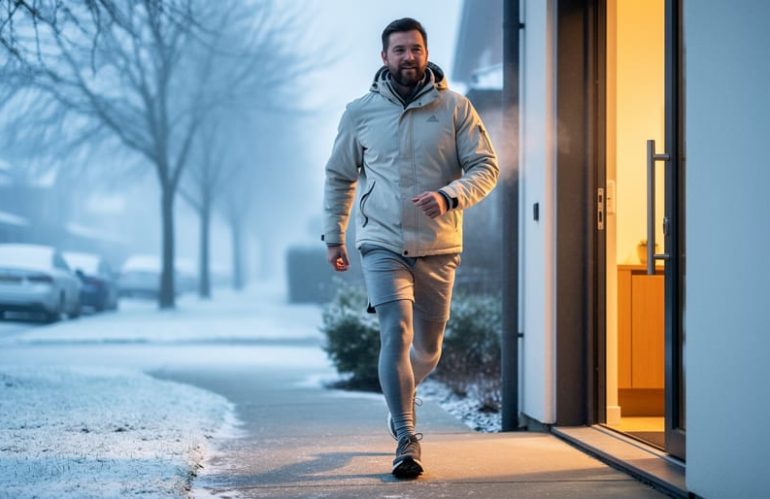
Relax. Wearing shorts in winter won’t give you a cold or damage your health, despite what your grandmother might have told you. The myth that cold weather directly causes illness has been scientifically debunked. Viruses cause colds, not temperature alone. Your body is remarkably efficient at regulating its core temperature, and as long as you’re not experiencing hypothermia symptoms like uncontrollable shivering or confusion, you’re probably fine.
That said, there are real considerations beyond catching a cold. Prolonged exposure to cold temperatures can lead to frostbite on exposed skin, typically when temps drop below 32°F and especially with wind chill. Your legs have less fatty tissue than your torso, making them more vulnerable to cold-related discomfort even if not technically dangerous. People with circulation issues, diabetes, or Raynaud’s disease face higher risks and should layer up regardless of personal preference.
The smart approach balances comfort with common sense. If you’re running between heated spaces like your car and office, shorts might work fine. But extended outdoor exposure requires proper coverage. This is where building a versatile winter-to-summer wardrobe becomes essential, mixing quality custom layers that adapt to changing conditions without breaking your budget.
The real question isn’t whether shorts are universally bad in winter. It’s whether you’re making informed choices based on actual temperature, wind conditions, your health status, and duration of exposure. We’ll break down the science, practical temperature thresholds, and when your winter shorts habit crosses from quirky to genuinely risky.
The Science Behind Cold Exposure and Your Body
What Actually Happens When Your Legs Get Cold
When your legs meet cold air, your body triggers a simple protective response: blood vessels near the skin surface constrict, reducing blood flow to preserve warmth for your vital organs. This is normal and not dangerous. Your leg muscles generate significant heat during movement, and the larger muscle groups in your thighs act like built-in furnaces that keep the tissue underneath your skin warm even when the surface feels chilly.
The skin on your legs is also tougher and less sensitive than areas like your hands, face, or neck. It has fewer nerve endings and a thicker outer layer, making it naturally more resistant to cold exposure. You might notice your legs turning red or feeling numb temporarily, but this is just surface-level adaptation, not tissue damage.
Here’s what matters: cold weather doesn’t cause colds and cold legs don’t make you sick. Your immune system operates based on exposure to viruses, not temperature. As long as you’re moving and your core stays warm, your legs can handle considerably more cold than most people assume without any real health consequences.
Core Temperature vs. Skin Temperature
Your body maintains an internal temperature around 98.6°F regardless of how cold your skin feels. This core temperature keeps your vital organs functioning properly, while your skin temperature can fluctuate dramatically without causing harm.
When you expose your legs to cold air, blood vessels near the surface constrict to reduce heat loss. Your body sacrifices skin warmth to protect what matters: your heart, lungs, brain, and other critical organs. That’s why cold legs don’t automatically mean you’re at risk.
The real danger starts when your core temperature drops below 95°F, which triggers hypothermia. This happens when your body loses heat faster than it can produce it, typically from prolonged cold exposure affecting your entire body, not just your legs.
Your torso contains most of your vital organs and generates the majority of your body heat. A warm chest, back, and head can compensate for chilly legs because your body prioritizes maintaining that core warmth. Cold skin on your legs feels uncomfortable, but it’s not inherently dangerous unless you’re unable to warm up or your core temperature begins dropping.
When Wearing Shorts in Winter Actually Becomes a Problem
Temperature Thresholds That Matter
The temperature range where shorts remain safe is broader than most people think. Above 40°F (4°C), shorts pose virtually no health risk for most people during typical outdoor activities, even if you feel chilly. Your body easily maintains core temperature at these levels without extra leg coverage.
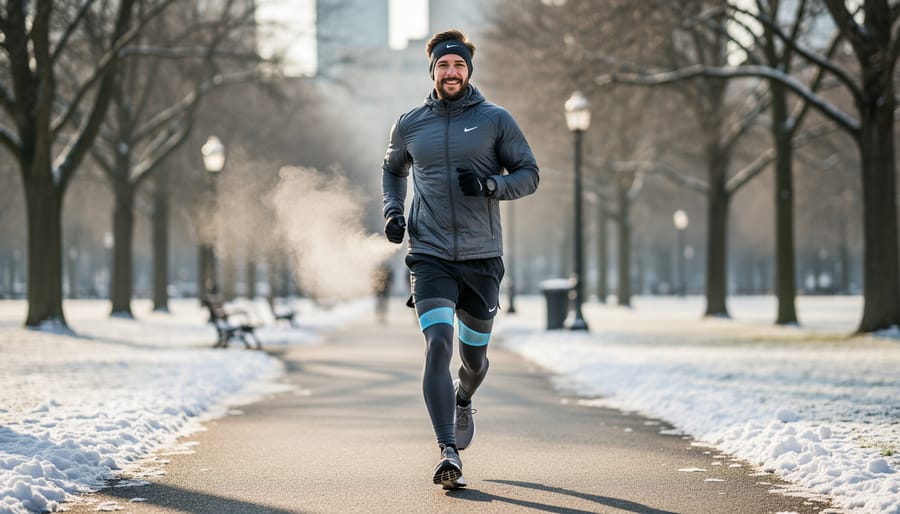
Between 32°F and 40°F (0°C to 4°C), shorts are still generally fine for active pursuits like running or walking briskly. The key is movement, your muscles generate enough heat to keep blood flowing properly. Standing still at a bus stop changes the equation. Factor in wind chill here: 35°F with 15 mph winds feels like 25°F, making exposed skin much more vulnerable.
Below 32°F (0°C), you’re entering territory where frostbite and hypothermia risk increases significantly, especially with any wind. Shorts become questionable unless you’re doing intense exercise and limiting exposure to under 20 minutes. Once temperatures drop below 20°F (-7°C), covering your legs isn’t about toughness, it’s about preventing actual tissue damage.
Remember that wind chill matters more than the thermometer reading. A calm 30°F day is vastly different from a windy one at the same temperature.
Who Should Skip the Winter Shorts
While most healthy people can wear shorts in cold weather without major concerns, certain groups face genuine risks and should think twice before exposing their legs to winter temperatures.
People with diabetes top this list. Diabetes often causes reduced blood flow to the extremities and peripheral neuropathy, which means you might not feel the cold as effectively. You could develop frostbite without realizing it’s happening. If you have diabetes, keeping your legs covered in winter isn’t just about comfort, it’s about preventing serious tissue damage that could lead to complications.
Anyone with circulation problems, including peripheral artery disease or Raynaud’s phenomenon, should stick with pants. These conditions already limit blood flow to your legs and feet, making it much harder for your body to maintain safe skin temperatures. Cold exposure can trigger painful episodes and potentially cause tissue damage.
If you’re taking medications that affect circulation, like beta-blockers or certain blood pressure medications, your body’s ability to regulate temperature in your extremities is compromised. The same goes for people undergoing chemotherapy, which can cause peripheral neuropathy similar to diabetes.
Older adults should exercise more caution too. As we age, our ability to sense temperature changes decreases, and circulation naturally becomes less efficient. What feels tolerable might actually be risky.
When in doubt, choose warmth over fashion. Your long-term health matters more than proving a point about cold tolerance.
Smart Layering: Protecting What Really Matters
Base Layers That Work
The foundation of staying warm while wearing winter shorts starts with choosing the right shirt materials next to your skin. Merino wool and synthetic blends excel at moisture management, pulling sweat away from your body so you don’t get that clammy chill during activity. Cotton feels comfortable initially but holds moisture against your skin, which can leave you cold once you stop moving.
For active winter wear, look for moisture-wicking tees in polyester blends or merino wool weights between 150-200 gsm. These work perfectly as standalone pieces for higher-intensity activities or as base layers under heavier shirts. The beauty of custom shirt layering is that you can create personalized base layers for specific activities, design breathable athletic tees for winter runs or thermal-weight long sleeves for outdoor work.
Custom-printed performance fabrics have come a long way in quality and affordability. You can now get moisture-wicking shirts with your own designs printed using water-based inks that don’t compromise breathability. This means your winter base layers can be both functional and express your personality or brand, whether you’re hitting the gym, working outdoors, or just running errands in shorts during a mild winter day.
The key is having multiple shirt options in different weights so you can adjust your upper body insulation based on activity level and temperature.
The 60/40 Rule for Winter Dressing
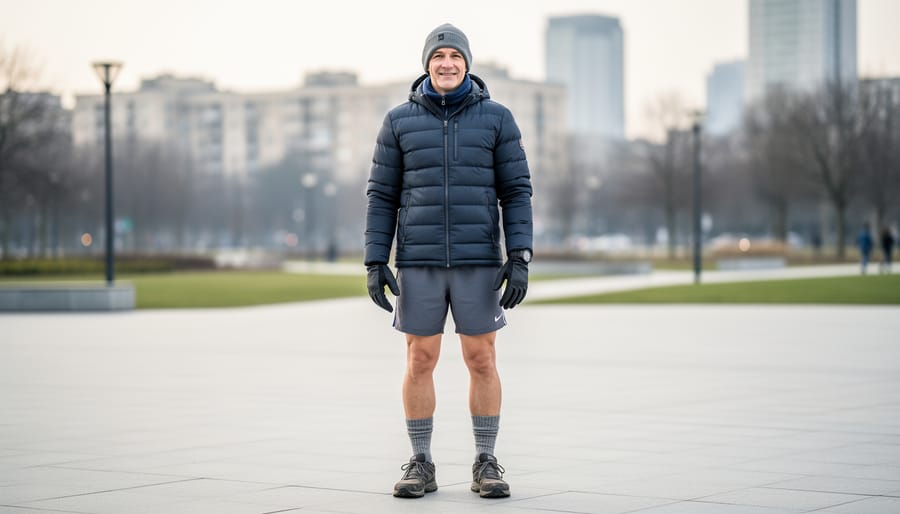
Your body does not cool evenly, which is why the 60/40 rule works so well for winter comfort. Focus roughly 60% of your warmth effort on your torso and upper body, and 40% on your lower half. This distribution mirrors how your body actually loses heat and maintains function in cold weather.
Your core houses vital organs that need consistent temperature regulation. When your chest, back, and arms stay warm through proper layering strategy your body can afford to send adequate blood flow to your extremities, including your legs. A quality long-sleeve base layer, a midweight shirt, and a decent jacket provide more cold protection than heavy pants ever will.
Your legs generate significant heat through movement and muscle mass. Walking, standing, or any activity keeps blood circulating through your thighs and calves, which naturally run warmer than your arms. This makes shorts viable down to about 40°F for most people who are moving around.
The rule breaks down if you are sitting still for extended periods or if temperatures drop below freezing. But for active winter days in moderate cold, investing in a few good custom shirts and a solid jacket matters far more than what covers your legs. You will stay comfortable and safe while enjoying the freedom of movement that shorts provide.
Building Your Winter Wardrobe the Affordable Way
Custom Winter Tees for Every Activity
Custom-printed shirts solve one of winter’s biggest wardrobe challenges: having the right piece for different activities without buying something new every time. A moisture-wicking custom tee works perfectly under your hoodie at the gym, then layers under a button-down for errands. The same shirt that keeps you dry during cold-weather runs becomes your favorite base layer on freezing mornings.
Quality matters more than quantity. A few well-made custom tees in merino wool blend or performance polyester will serve you better than a drawer full of cheap cotton that stays damp and cold. Look for prints that won’t crack or fade after repeated washing, since you’ll actually wear these pieces constantly throughout winter. This approach helps you build a versatile closet without the typical seasonal shopping expense.
The real advantage shows up when you customize for specific needs. Print a batch of long-sleeve tees in technical fabric for outdoor activities, add some crew-neck styles in soft cotton blends for layering, and include a few lightweight options for heated indoor spaces. At bulk pricing, you’re paying less per shirt than retail while getting exactly what works for your winter routine. You control the fit, the fabric weight, and the design, which means every piece actually gets worn instead of sitting unused.
Sustainable Choices for Cold Weather Apparel
Choosing eco-friendly winter shirts doesn’t mean sacrificing warmth or quality. Water-based inks produce vibrant custom designs while reducing harmful chemical runoff compared to traditional plastisol inks. These inks feel softer against your skin too, which matters when you’re layering multiple shirts for cold weather protection.
Organic cotton and recycled polyester blends offer excellent moisture-wicking properties for winter base layers while minimizing environmental impact. These sustainable fabrics perform just as well as conventional materials, keeping you dry during winter activities whether you’re wearing shorts or full coverage.
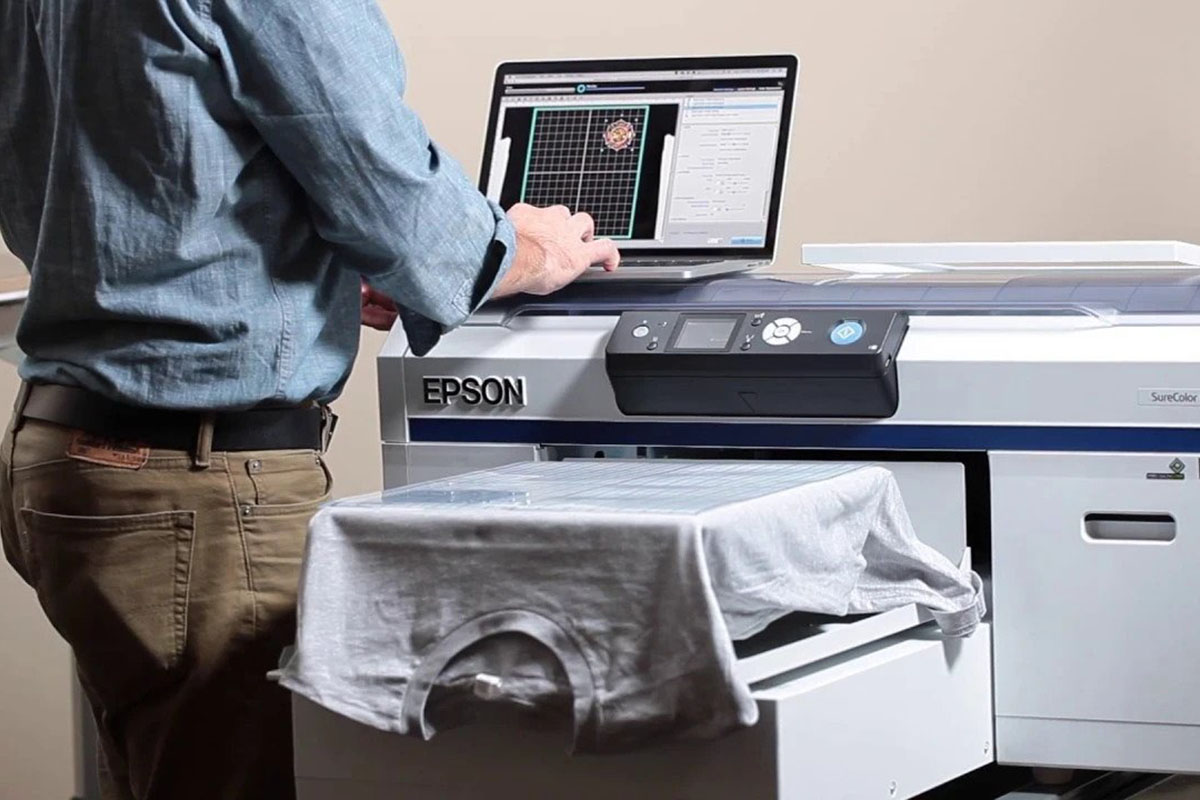
Digital printing technology has revolutionized custom apparel by drastically cutting water usage and fabric waste. Unlike screen printing that requires separate setups for each color, digital methods print directly onto garments with minimal resource consumption. This efficiency translates to lower costs for you while supporting responsible manufacturing practices.
When building your winter wardrobe, look for print shops that use eco-friendly processes and sustainable blanks. Quality custom shirts made responsibly will last through multiple winters, reducing the need for frequent replacements and ultimately decreasing textile waste.
So, is wearing shorts in winter bad for you? The short answer is no, not if you’re doing it right. What matters most isn’t covering every inch of skin but maintaining your core temperature through smart layering choices. Your legs can handle the cold far better than you might think, especially when you’re active and your torso is properly protected.
The key takeaway is simple: prioritize what matters. A quality base layer shirt, proper outerwear, and attention to your core will keep you safe and comfortable even when your legs are exposed. Understanding the difference between feeling chilly and actual health risks helps you make confident decisions about your winter wardrobe.
As you build your cold-weather clothing strategy for 2026, think about versatility and personalization. Custom-printed shirts offer an affordable way to create layering options that work for your specific needs, whether that’s moisture-wicking tees for winter workouts or thicker base layers for everyday wear. Choosing eco-friendly printing options means you’re making responsible choices for both your comfort and the environment.
Winter dressing doesn’t have to be complicated or expensive. Focus on protecting your core, know your temperature limits, and invest in quality pieces that serve multiple purposes. With the right approach, you can stay warm, healthy, and true to your personal style all season long.